


Cubic Zirconia vs Diamond and What Sets Them Apart
A cubic zirconia stone and a diamond can look almost identical at arm's length, yet one sells for a few dollars and the other for thousands. The reason comes down to what each stone is made of, and that single fact shapes how they sparkle, how they hold up, and what they are worth.
In this guide, we’ll walk you through where the two split, the checks that reveal which is which, and how to match the right stone to the right moment.
Key Takeaways
-
The two stones begin as completely different raw materials, and that one detail drives the rest of the comparison.
-
Only one of them qualifies as a real diamond, and the answer catches most shoppers off guard.
-
Sparkle divides them cleanly: one returns whiter light, the other flashes more color.
-
Daily wear pulls them apart faster than any lab test.
-
A handful of at-home checks can reveal which stone you are holding.
-
Budget and purpose, more than looks, decide which one belongs on your finger.
What Is the Difference Between a Diamond and Cubic Zirconia?

A diamond is pure carbon, crystallized deep in the earth or grown in a lab under heat and pressure.
Cubic zirconia is zirconium dioxide, a stone engineered in a lab and first sold for jewelry in the mid-1970s.
Both form the same cubic crystal shape, which explains the strong surface likeness, so telling cubic zirconia apart from a diamond takes more than a quick glance.
CZ vs Diamond at a Glance
|
Property |
Diamond |
Cubic Zirconia |
|
Composition |
Carbon |
Zirconium dioxide |
|
Origin |
Natural or lab-grown |
Lab-made only |
|
Hardness (Mohs) |
10 |
8–8.5 |
|
Refractive index |
~2.42 |
~2.15–2.18 |
|
Fire (dispersion) |
0.044 |
0.058–0.066 |
|
Longevity |
Lifetime |
Fades within a few years |
Is Cubic Zirconia a Diamond or a Diamond Simulant?
No, cubic zirconia is not a diamond. It belongs to a family of stones called simulants, built to copy a diamond's appearance without carrying its carbon structure.
Lab-grown stones cause most of the mix-up. A lab-grown diamond shares the exact makeup of a mined one and counts as a real diamond. A simulant only copies the surface look.
Diamond and zirconia come from separate mineral families, and no cut or polish erases that. Anyone weighing lab-grown diamonds and cubic zirconia against each other is really holding a genuine diamond next to a convincing stand-in.
Silicone Ring With Diamond
View Full Collection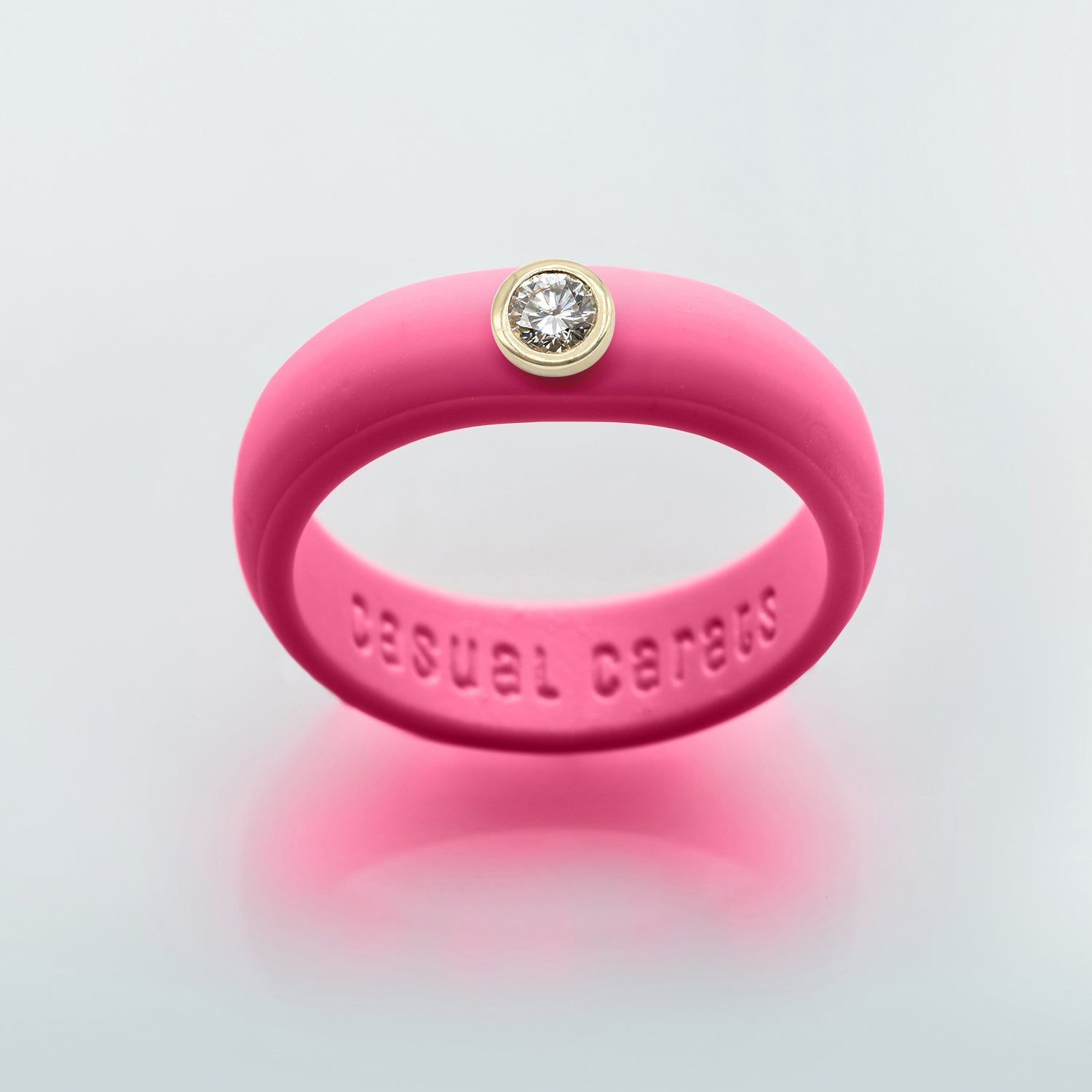
Do the Two Stones Sparkle the Same Way?
No, and a jeweler needs only a few seconds to see it. Sparkle breaks into two separate effects, and each stone leads in one of them.
Brilliance
Brilliance is the white light a stone returns to the eye, and it sets how bright a piece looks across a room. Refractive index determines that brightness, measuring how much a stone slows and bends the light passing through it.
-
Diamond: A refractive index near 2.42 sends a strong return of white light straight back to the eye, giving the steady, sharp shine most people expect from a fine stone.
-
Cubic zirconia: A lower index, around 2.15, lets more light escape out the sides and the back, so the white return looks softer and weaker beside a diamond of the same cut.
Fire
Fire is the colored flash a stone gives off as it splits white light into separate hues. Dispersion measures that flash, and a higher figure means more color.
-
Diamond: Dispersion of 0.044 gives balanced flashes that stay in step with the white brilliance, so the sparkle looks clean.
-
Cubic zirconia: Dispersion between 0.058 and 0.066 throws far more rainbow color, and in strong light that surplus can look glassy and overdone.
Which Stone Holds Up to Everyday Life?

A diamond holds up to daily life far better than its look-alike.
On the Mohs scale of hardness, a diamond earns a perfect 10, the highest rating any natural material reaches, so it resists scratches through decades of wear.
Cubic zirconia lands at 8 to 8.5, soft enough that facet edges dull and the surface clouds after a few years, which is why many CZ pieces get swapped out for fresh ones.
Density adds a quieter difference. A cubic zirconia stone weighs more than a diamond of the same size, so a one-carat CZ looks a little smaller than a one-carat diamond of the same cut.
How Can You Tell Cubic Zirconia From a Diamond?
Several checks separate the two without any lab equipment. Run through these before you trust a stone at face value.
-
Look at the flash. White sparkle points toward a diamond, and heavy rainbow color points toward the imitation.
-
Check the facet edges. A diamond keeps crisp, sharp edges, and a simulant tends to show softer ones.
-
Feel the weight. The heavier stone of two matching sizes is usually cubic zirconia.
-
Try the fog test. Breathe on the stone; a diamond clears almost at once, and the imitation stays foggy a moment longer.
-
Study the clarity. A flawless, perfectly clear stone is a warning sign, since natural diamonds carry tiny inclusions.
One trick to skip is the glass-scratch test, since both stones cut glass and it proves nothing. Learning how to tell if a diamond is real with a loupe or a thermal probe clears up any doubt the at-home tells leave behind.
When Should You Choose Cubic Zirconia or a Diamond?
The choice between cubic zirconia and a diamond comes down to purpose and budget, not looks. Match the stone to the job you need it to do.
Cubic Zirconia
-
Fashion and trend pieces you rotate through the year
-
Costume jewelry and statement looks for a single event
-
Testing a shape or setting before buying something costlier
A low price makes cubic zirconia easy to swap as trends change, which suits budgets and short-lived looks over pieces you plan to keep for years.
Diamond
-
Engagement and wedding rings meant to last
-
Heirloom pieces passed down through a family
-
Everyday jewelry you want to keep for decades
The higher price buys permanence and resale value a simulant cannot match, which counts for anything you treat as an investment.
Moissanite
-
A diamond look on a much smaller budget
-
Daily wear that needs strong scratch resistance
-
Extra fire and sparkle without the diamond price
Moissanite is far harder than cubic zirconia and holds up close to a diamond in daily wear, at a price well below a mined stone. Anyone torn between the two can weigh how moissanite compares with a diamond on hardness, fire, and price before deciding.
Where Do Genuine Diamonds Fit Into Everyday Wear?

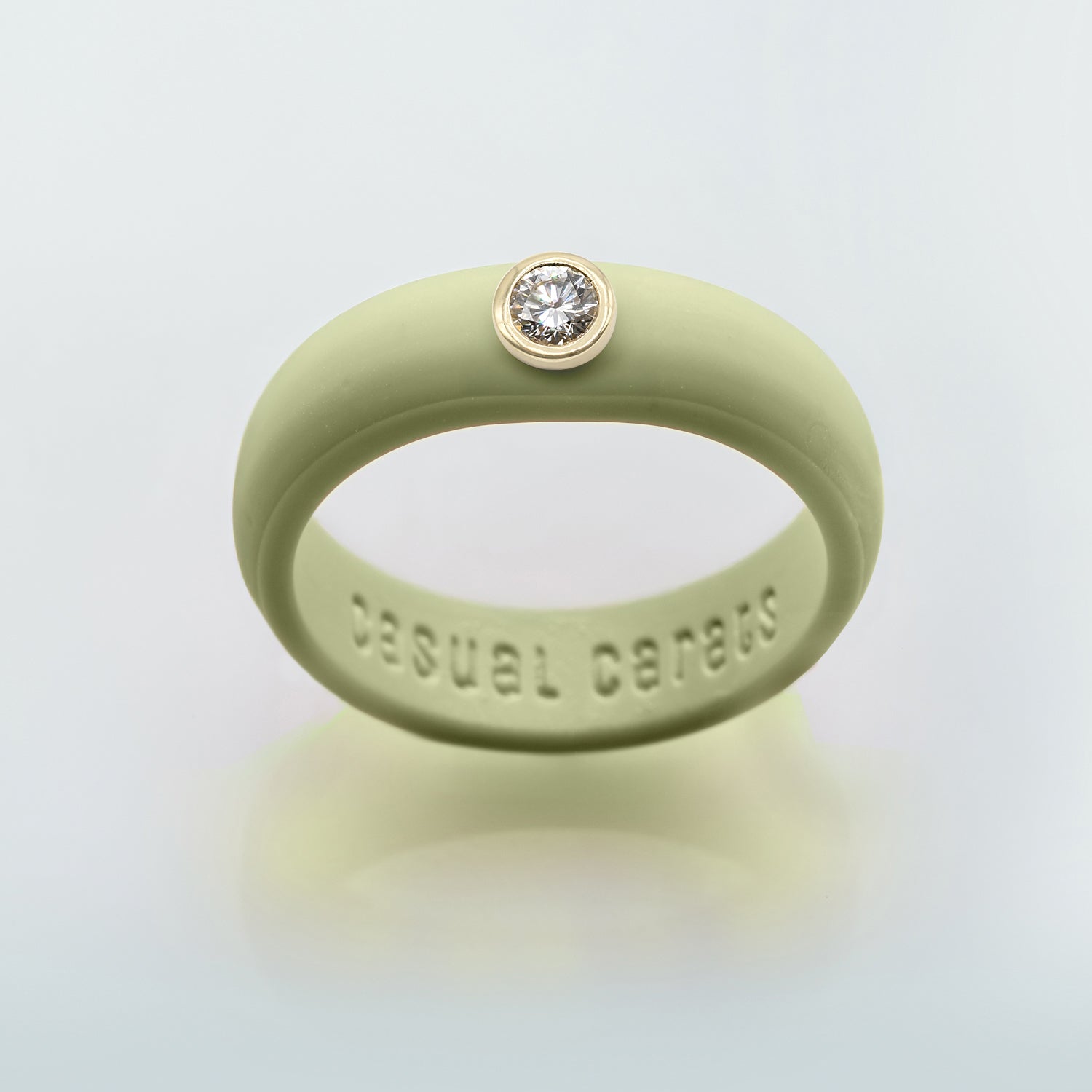
We built Casual Carats for people who want a real stone on their hand every day, not locked away in a box. Our rings set genuine and lab-grown diamonds into flexible silicone bands, so the stone that lasts a lifetime rides along through workouts, gardening, and everyday tasks without the worry that comes with a rigid metal band.
The silicone flexes with your finger and stays comfortable through a full day, and the diamond keeps its sparkle the whole time. Our silicone rings set with a genuine diamond come in a wide spread of band colors and stone sizes, so you can build the ring around your own hand and style.
So Which Stone Should You Wear?
The split between cubic zirconia and a diamond starts with makeup and shows up in every place that counts: the sparkle, the wear, the price, and how long the stone stays with you. Cubic zirconia gives an affordable, short-term shine for fashion and fun. A diamond gives permanence for the pieces you plan to keep.
Once you know the difference, the right pick for any moment becomes an easy call.


