


What Is Yellow Gold? The Golden Standard in Fine Jewelry
What Is Yellow Gold? The Golden Standard in Fine Jewelry
Before white gold existed and before rose gold had a name, yellow gold was simply called gold. Worn by pharaohs, traded across empires, slipped onto fingers for thousands of years. It never really went anywhere.
Today, it's having a full-scale revival in fine jewelry, and for good reason: yellow gold holds its color without any plating, pairs beautifully with nearly every gemstone, and looks just as polished on a silicone band as it does in any traditional setting.
Key Takeaways
-
Yellow gold is an alloy, not pure gold. The blend of metals is exactly what makes it wearable.
-
The karat number shows how much gold is in the mix and directly shapes the depth of color.
-
Types of yellow gold range from 10K to 24K, each with a different balance between richness and durability.
-
Yellow gold and rose gold share more chemistry than most people realize. One ingredient separates them.
-
The tarnish question has a more nuanced answer than you'd expect. Karat level is the deciding factor.
-
Yellow gold pairs beautifully with active, everyday jewelry, including silicone settings.
What Is Yellow Gold, and Why Has It Outlasted Every Trend?

Yellow gold is a metal alloy: pure gold blended with silver, copper, and small amounts of zinc to create a material durable enough for daily wear without losing gold's naturally warm tone.
The history runs deep. The oldest known gold jewelry dates to around 4,600 BC in Bulgaria. From there, the metal traveled across civilizations that had almost nothing else in common:
-
Ancient Egyptians shaped it into burial masks and ceremonial objects, trusting its rust resistance as a mark of permanence.
-
Greek and Roman jewelers refined the craft, circulating gold across trade routes from Europe to India.
-
In the 1940s, platinum was classified as a strategic wartime material in the U.S., pushing yellow gold back to the top of the jewelry market.
-
Today, the resurgence is design-driven: warm tones, vintage settings, and layered stacking rings all favor yellow gold.
One fact has stayed the same through all of it: yellow gold requires no plating, no coating, and no maintenance treatment to keep looking like itself.
What Actually Makes Yellow Gold Yellow?
Pure gold is naturally yellow. That pure gold color persists in jewelry because jewelers specifically choose alloy metals that strengthen gold without altering its tone. 24K gold is too soft for daily wear, so it gets blended with other metals. The art lies in which metals are added and in what proportion.
|
Metal |
Role in the alloy |
|
Copper |
Adds warmth and hardness; pushes the tone toward amber |
|
Silver |
Brightens the hue and improves malleability |
|
Zinc |
Stabilizes color consistency and adds structure |
The copper-to-silver ratio is the real lever. More copper creates a deeper, warmer yellow. More silver keeps things bright and closer to the natural pure gold color. Jewelers calibrate this balance to achieve a consistent hue at each karat level.
This is what sets yellow gold apart from the other alloys. White gold gets its color bleached by palladium or nickel. Rose gold tips into pink from a higher copper concentration. Yellow gold is the only alloy that holds close to what gold actually looks like in nature, no modifications needed.
Stackable Bands
View Full Collection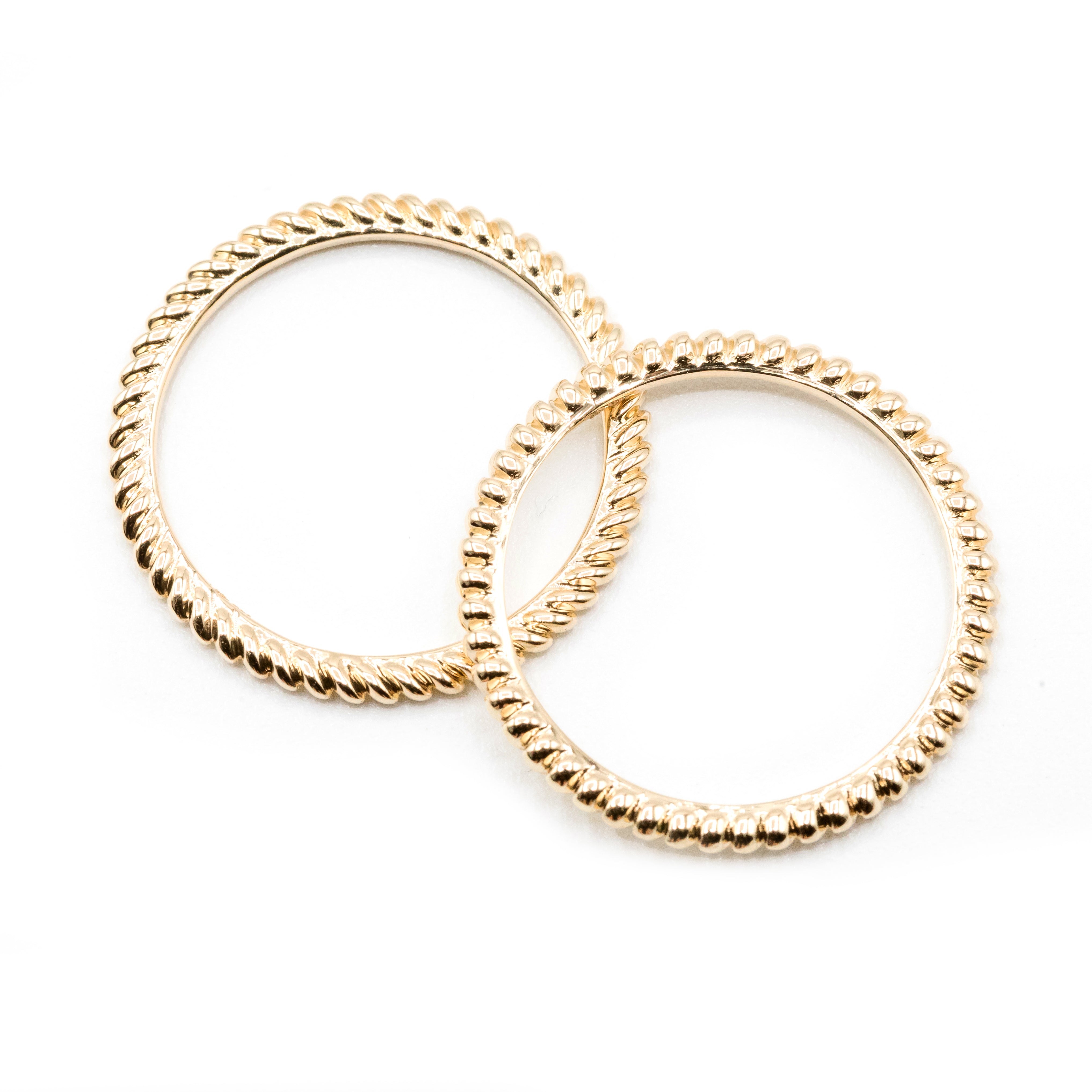
What Are the Types of Yellow Gold?
The types of yellow gold are defined by karat: the number that tells you exactly how much pure gold is in the alloy. Higher karat means more gold, richer color, and a softer metal. Lower karat means more alloy content, greater durability, and a lower price point. Each level is a deliberate trade-off.
10K Yellow Gold
41.7% pure gold. The most durable option and the most affordable, but the least rich in color. A solid choice for pieces that take real daily wear.
14K Yellow Gold
58.3% pure gold. The sweet spot for most jewelry buyers, and the standard across the U.S. market. Yellow gold is at its most wearable here: strong enough for active use, warm enough in color to look unmistakably gold. Most of our pieces are set in 14K for exactly this reason.
18K Yellow Gold
75% pure gold. Noticeably richer in color than 14K, with a deeper, more saturated tone. Preferred for fine jewelry and engagement rings where visual depth matters more than hardness. Slightly softer, so it picks up scratches more easily.
22K and 24K Yellow Gold
22K (91.7% gold) is common in traditional South Asian and Middle Eastern bridal jewelry, prized for its deep amber tone. 24K is pure gold with no alloy at all. Jewelers rarely use it in wearable pieces since it bends and deforms under normal pressure.
How Does Yellow Gold Compare to Rose Gold?

The difference comes down to one ingredient. Both metals share the same base alloy, but rose gold uses a much higher ratio of copper. That copper shifts the color from warm yellow into a pink-blush range, and it also makes rose gold slightly harder at the same karat.
Where they diverge most is in style:
-
Yellow gold is classic and timeless, complementing virtually any gemstone or setting.
-
Rose gold reads as romantic and modern-vintage, with a blush tone that leans more feminine.
Neither outperforms the other. Skin tone can influence the choice: yellow gold tends to stand out on deeper and olive complexions, rose gold looks particularly flattering on fair and cool-toned skin. That said, both work across the full spectrum.
Does Yellow Gold Tarnish?
Pure gold doesn't tarnish. Yellow gold, as an alloy, can develop discoloration over time because the alloy metals react with moisture, sweat, and everyday chemical exposure. The karat level determines how much of that reaction is actually possible.
Karat and Tarnish Risk
The more alloy metals in the mix, the higher the exposure to reactive elements. At 10K (41.7% gold), tarnish is a real consideration. At 14K and 18K, well-maintained pieces hold their color for decades. Above 18K, the risk is minimal.
Yellow gold is easier to maintain than white gold for one specific reason: no rhodium plating means nothing wears off. What you see is what the metal actually is, all the way through.
How to Keep It Looking Fresh
A few habits cover most of the risk:
-
Remove jewelry before swimming, heavy cleaning, or applying lotions.
-
Wipe pieces down with a soft cloth after wear.
-
Store separately to prevent scratching.
-
Clean with warm water and mild dish soap when needed.
If tarnish does appear, a professional polish restores it quickly.
How Is Yellow Gold Different from White Gold?
The most practical difference is one that affects your wallet over time. White gold gets its cool, silvery tone from rhodium plating, a thin coating that needs to be reapplied every one to three years as it wears down. Yellow gold has no coating. The color lives in the alloy itself, so there's no replating cost and no maintenance schedule to keep track of.
Beyond maintenance, the two metals suit different looks:
Color and Diamond Pairing
White gold's neutral tone works best with colorless (D-F grade) diamonds, where the cool metal doesn't compete with the stone's bright face. Yellow gold is an excellent choice for diamonds in the G-J color range, since the warm metal absorbs any faint yellow tint in the stone rather than drawing attention to it.
Skin Sensitivity
Some white gold formulations contain nickel, which can irritate sensitive skin. Yellow gold alloys typically don't include nickel, making them the gentler option for most people.
What Makes Yellow Gold a Great Choice for Everyday Jewelry?

Yellow gold's warm tone and low-maintenance nature make it an ideal metal for pieces you wear daily, not just on special occasions. The real advantage shows up when it's paired with silicone.
Gold and Silicone: A Practical Pairing
Setting a 14K yellow gold piece into a silicone band solves two things at once. The silicone absorbs impact and pressure from daily activity, protecting the gold setting from the wear a traditional metal band would accumulate. The gold keeps its color and structure without any treatment needed between wears.
The warm tone pairs naturally with silicone band colors, too. From neutral nudes and blacks to bold pinks and greens, yellow gold reads consistently rich against almost any background.
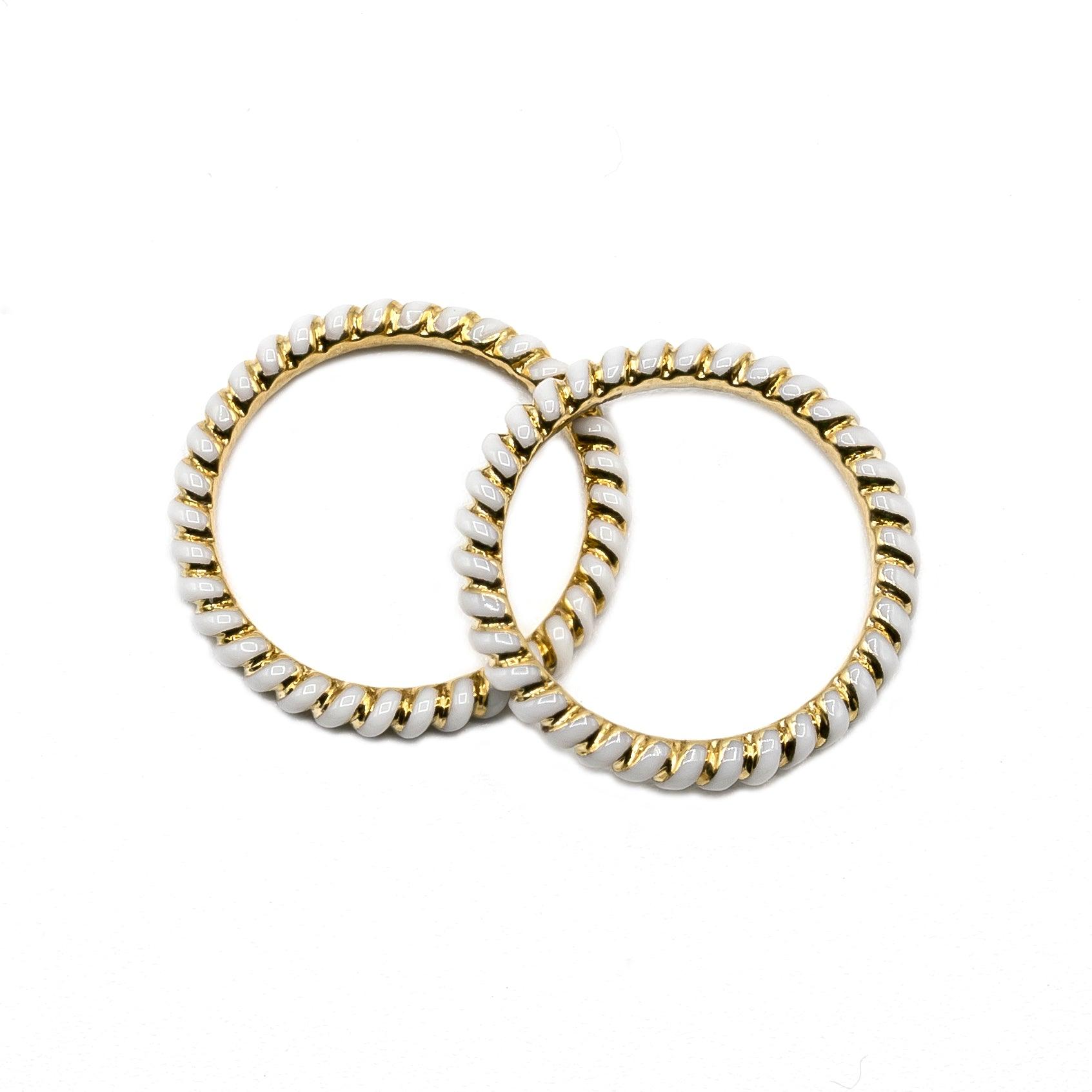
The Skinny Rope Band in 14K yellow gold is a good example of what this looks like in practice: a clean, minimal design that holds its elegance through workouts, errands, and everything in between.
How Do You Style Yellow Gold for the Most Impact?
Yellow gold stacks well. That's probably the simplest styling truth about it. Layering multiple yellow gold bands creates depth without visual noise, especially when you mix textures: a plain band next to a rope band next to a diamond eternity ring reads as intentional rather than mismatched.
Stacking and Mixed Metals
Yellow gold layers naturally with rose gold, too. The two share a warmth that makes them feel cohesive side by side, unlike pairing yellow and white gold, which creates a sharper contrast.
Gemstone Pairing
Warm-toned stones (rubies, garnets, cognac diamonds) look cohesive in yellow gold. The metal and stone feel like they naturally belong together. Against cool-toned stones like sapphires and emeralds, yellow gold creates a bold contrast that pulls the eye directly to the stone.
The Diamond Eternity Band Ring stacks beautifully with other bands in yellow gold, adding sparkle without competing with the pieces around it.
Ready to Add Some Gold to Your Routine?

Yellow gold has stayed at the center of fine jewelry for thousands of years for one clear reason: it performs. The color is real, the maintenance is minimal, and the versatility covers everything from a diamond solitaire to a silicone band worn through a workout.
For a first piece or the tenth one in your collection, yellow gold holds its value in every sense. Classic without being dated. Warm without being loud. Exactly what gold should be.


