


What Are the Different Types of Gold?
What Are the Different Types of Gold?
Gold seems straightforward until you're actually buying a piece. Three different colors on the counter, a number stamped inside, and suddenly a simple choice feels more complicated. The types of gold used in fine jewelry vary in color, composition, and durability. Each difference is worth knowing before you commit.
In this guide, we will cover the colors of gold you'll actually encounter, explain how karat numbers work, and help you choose what suits your lifestyle and the way you wear your jewelry.
Key Takeaways
-
Pure gold is always yellow. Every other color comes from alloying it with different metals.
-
Yellow, white, and rose gold are the three main types of gold found in everyday jewelry.
-
Green, black, and blue gold also exist, though they show up mostly in specialty pieces.
-
Karats measure purity, not color. 14K hits the sweet spot for daily wear.
-
Choosing the best type of gold comes down to more than looks. Skin tone, durability, and lifestyle all factor in.
What Is the Colour of Gold and Why Does It Vary?

Pure gold is always yellow. That is its natural, unaltered state. Every other shade you see in a jewelry case comes from the same starting point, modified by blending pure gold with other metals in a technique called alloying.
The alloying metals determine the final color, and so do their proportions. A small addition of copper creates a soft blush. Push the copper content higher, and the tone deepens to a reddish hue. Introduce palladium or nickel and zinc, and the warm gold base moves toward a cool, silvery finish. Here is how the main metal groups shape the result:
-
Copper: produces rose, pink, and red tones.
-
Palladium or nickel: creates white gold's bright, silvery finish.
-
Silver: introduces a subtle greenish tint.
This is what gives gold its range of colors, and why two rings can both be 14K gold and look completely different sitting side by side.
What Are the Different Types of Gold?
There are three main types of gold used in jewelry: yellow, white, and rose. Each has a distinct look, a different maintenance routine, and real practical differences for everyday wear.
Yellow Gold

Composition
Yellow gold is formed by blending pure gold with silver, copper, and zinc. The proportions vary depending on the karat, but the goal is the same across all of them: strengthen the metal for wear without pulling the color away from its natural warmth. No surface coating is applied. The tone comes entirely from the alloy itself.
Color & Appearance
Of all the gold colors, yellow gold sits closest to pure gold's natural hue. The tone is warm and rich, deepening with higher karat levels. At 18K, the color is noticeably richer than at 14K, where a slightly higher alloy content produces a subtler shade. It pairs naturally with warm-toned gemstones and adds depth to colored stones like rubies, garnets, and cognac diamonds.
Durability
Yellow gold is softer than both white and rose gold at the same karat weight. It will show fine scratches with regular wear, especially at higher purities. For pieces worn daily, 14K strikes a solid balance between color and resilience.
Maintenance
Yellow gold is the most low-maintenance of the three main types. No plating is involved, so there is nothing to wear off or reapply. A regular polish and the occasional gentle clean are all it takes to hold its appearance over the long term.
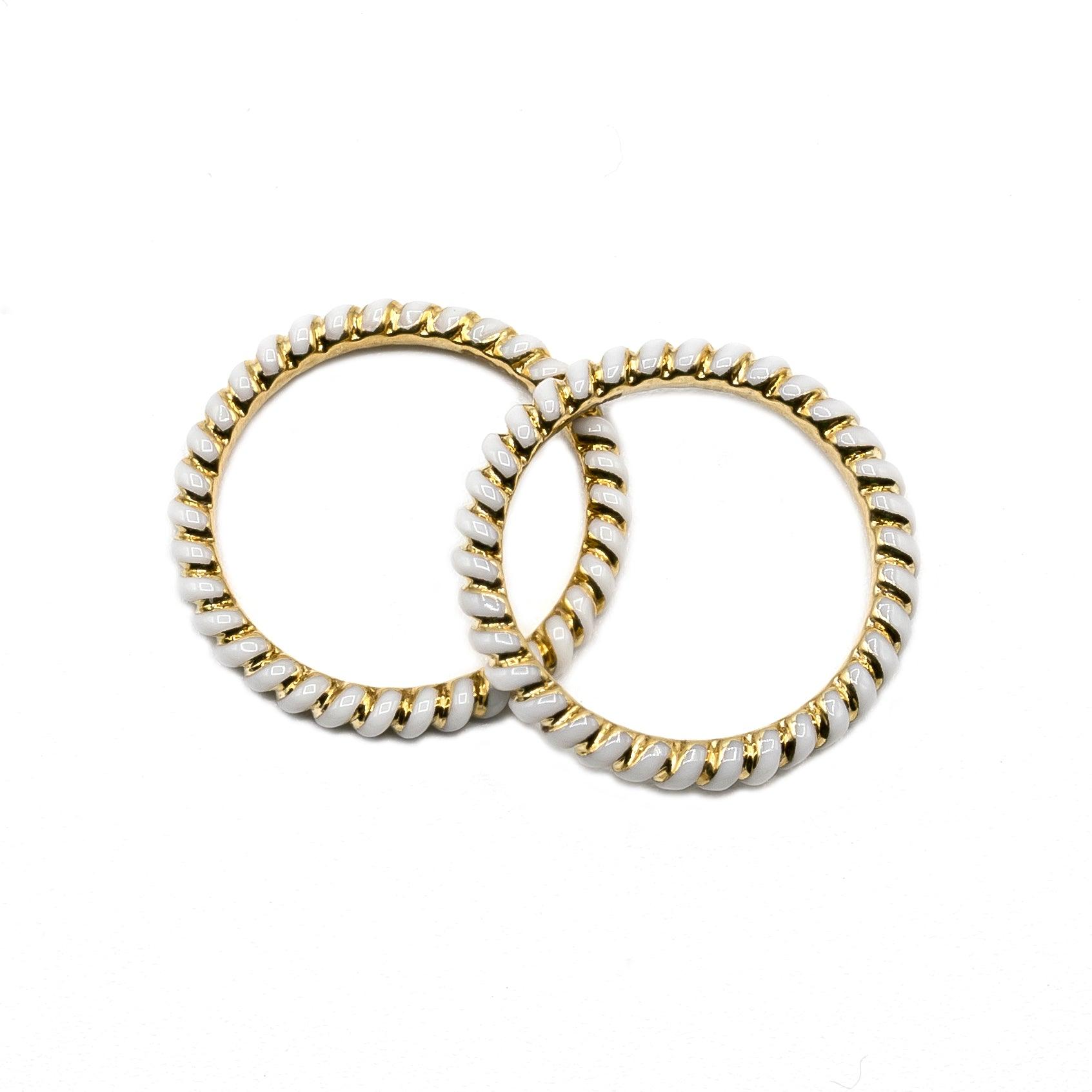
Stackable Bands
View Full Collection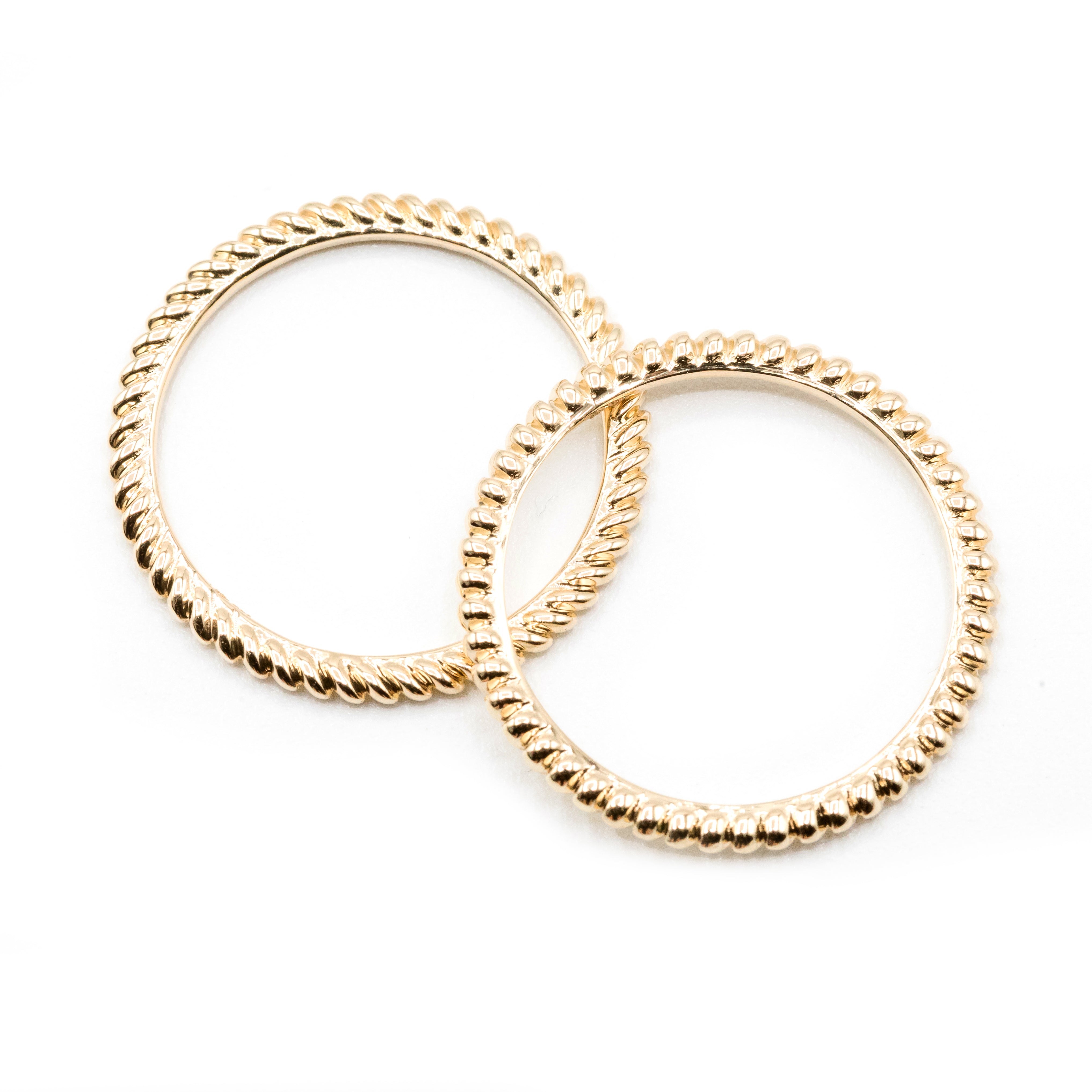
Best For
Yellow gold suits warm and olive skin tones particularly well. It is also the most hypoallergenic option for jewelry among the main gold colors, making it a reliable choice for anyone with metal sensitivities, especially at higher karat levels.
White Gold

Composition
White gold is made by alloying pure gold with palladium, nickel, or silver, then finishing the piece with a rhodium plating. Rhodium is a platinum-group metal and is responsible for the bright, mirror-like surface that white gold is known for. Palladium-based alloys are increasingly preferred in modern jewelry because they avoid nickel, which is a common cause of metal allergies.
Color & Appearance
White gold has a crisp, silvery-white finish that closely resembles platinum. The rhodium layer delivers that clean, reflective surface. As the plating wears down over time, a slightly warmer or off-white undertone may emerge from the alloy beneath. Replating restores the original look. White gold pairs exceptionally well with diamonds and cool-toned stones, where the neutral metal lets the gem take center stage.
Durability
White gold is harder than yellow gold, which makes it more resistant to everyday wear. The alloy metals used to create the white tone increase the base hardness, and the rhodium layer adds surface protection for as long as it holds. At the same karat, 14K white gold is more durable for daily wear than 18K, though 18K carries a higher gold content.
Maintenance
Rhodium plating wears down gradually. Most jewelers recommend replating every one to three years, depending on how the piece is worn. High-friction areas like the underside of rings tend to show wear first. Between services, routine cleaning with mild soap and water keeps white gold looking its best.
Best For
White gold is a strong choice for cool or fair complexions and for settings where the metal is meant to recede and let the stone do the work. It is particularly well-suited to diamond jewelry. Anyone with a nickel allergy should look specifically for palladium-based white gold to avoid skin reactions.
Rose Gold

Composition
Rose gold is alloyed with copper and a small amount of silver. The copper content controls the depth of color: a higher proportion produces a deeper, reddish tone, a lower proportion gives a softer blush-pink result. Like yellow gold, the color runs through the metal itself, not through any surface treatment.
Color & Appearance
Rose gold ranges from a warm blush pink to a deeper rose-red, depending on the specific alloy mix. The tone is consistent throughout the piece and does not change or fade with wear. Its warm, romantic quality works across both vintage-inspired settings and contemporary designs. Among the main shades of gold, rose gold is the most universally flattering, complementing warm, cool, and neutral skin tones equally well.
Durability
The copper content in rose gold makes it the most durable of the three main types. Copper adds hardness and resistance to the alloy, making it less prone to scratching and denting under daily activity. For pieces worn through workouts, outdoor time, or hands-on work, rose gold holds up particularly well.
Maintenance
Rose gold requires minimal upkeep. There is no plating to wear off, so the color stays exactly as it is indefinitely. Routine cleaning is all that is needed to keep it looking good. Over many years, it can develop a gentle patina that many wearers find adds to its character.
Best For
Rose gold suits virtually every skin tone, making it the most flexible choice if you are unsure which gold color works best with your complexion. Its durability also makes it a natural fit for jewelry worn every day, especially rings and bracelets that take the most daily contact.
Are There Other Shades of Gold Worth Knowing?
A few specialty shades of gold exist outside the main three, though they appear mostly in artisan and bespoke settings rather than everyday jewelry.
-
Green gold (electrum): a natural gold-silver alloy with a subtle greenish tint, historically used in ancient coins and antique pieces.
-
Black gold: achieved through oxidation or cobalt alloying, producing a bold, high-contrast finish.
-
Blue gold: an extremely rare alloy using indium and iron, found almost exclusively in high-end custom work.
-
Purple gold: a gold-aluminum alloy with a striking purple tone, though it's brittle enough that jewelers typically treat it as a stone rather than a setting metal.
These shades of gold are genuine options, but realistically, the choice for most people comes down to yellow, white, or rose.
How Do the Main Types of Gold Compare?

Each of the three main types of gold has real differences worth weighing side by side. The table below pulls the most practical factors together in one place, so you can see where they align and where they diverge before making a decision.
|
Yellow Gold |
White Gold |
Rose Gold |
|
|
Alloy metals |
Silver, copper, zinc |
Palladium or nickel + rhodium plating |
Copper, small amount of silver |
|
Color |
Warm, rich golden hue |
Bright silvery-white |
Soft pink to deeper reddish tone |
|
Durability |
Softest of the three |
Harder than yellow gold |
Most durable |
|
Maintenance |
No replating needed |
Rhodium replating every 1 to 3 years |
No replating needed |
|
Skin tone match |
Warm and olive tones |
Cool and fair tones |
Flatters nearly all tones |
|
Hypoallergenic |
Yes, especially at higher karats |
Depends on alloy; nickel can cause reactions |
Generally well-tolerated |
All three colors of gold are available in multiple karat levels, which adds another layer to the comparison. That side of the decision we will cover in the next section, so let’s go.
What Do Gold Karats Tell You?
Karats measure how much pure gold is in a piece. Nothing else. They have no bearing on color, no connection to which alloy metals were used, and no say in whether a ring looks yellow, white, or rose.
|
Karat |
Gold Content |
Best Used For |
|
24K |
99.9% |
Bullion and investment; too soft for wearable jewelry |
|
18K |
75% |
High-end fine jewelry and engagement rings |
|
14K |
58.3% |
Everyday jewelry; the most practical choice for daily wear |
|
10K |
41.7% |
The most affordable option, paler in appearance |
The relationship between purity and hardness runs in one direction: more gold means a softer metal. A 24K piece is beautiful but will pick up scratches and dents quickly under daily use. At 18K, the balance improves. At 14K, the metal is durable enough to hold up through active days without sacrificing the richness of the gold color.
This is why Casual Carats uses 14K gold settings across our silicone rings for women. A ring worn through workouts, water, and everything in between needs metal that can keep pace. 14K does exactly that, in both yellow and white gold, without any compromise on quality.
This purity question applies equally across all three types of gold. A 14K rose gold ring and a 14K white gold ring carry the same gold content.
Which Is the Best Type of Gold for Everyday Jewelry?
There is no single “best type” of gold for everyone. The right choice depends on what you are actually optimizing for. Use the table below to match your priorities to the right pick.
|
If you want... |
Best choice |
|
Zero maintenance, no replating |
Yellow gold or rose gold |
|
The most durable metal for daily wear |
Rose gold |
|
A bright, silvery look without the price of platinum |
White gold |
|
The most hypoallergenic option |
Yellow gold (14K or higher, palladium-based white gold is a close second) |
|
A color that flatters nearly every skin tone |
Rose gold |
|
The best match for diamonds and cool-toned stones |
White gold |
|
A warm, classic look with the lowest upkeep |
Yellow gold |
|
A ring that holds up to an active lifestyle |
Rose gold or yellow gold in 14K |
Which Gold Type Will You Wear?

Gold color and karat are two separate decisions, and both matter. Yellow, white, and rose gold each bring something distinct to a piece, whether that is warmth, crispness, or durability. Karats tell you how much gold you are actually getting and how the metal will hold up with regular wear.
Put those two factors together with your own style and daily routine, and the right choice becomes straightforward. Take a look at the Casual Carats collections of silicone rings with 14K gold bezels, built for real life and designed to stay on.


