


Types of Ring Settings and How to Choose Yours
Two rings can hold the same diamond on the same band and still look like completely different pieces. The reason is the setting. A setting is the metal structure that grips the stone and anchors it to the band, and it controls how much light reaches the gem, how safe the stone stays through daily wear, and how high the ring sits on your finger.
In this guide, we’ll walk you through the main types of ring settings, explain what separates one from the next, and give you a clear method for picking the one that suits your hand and your routine.
Key Takeaways
-
A ring setting is the metal structure that holds the stone, and it shapes much more than appearance.
-
Setting and style are two separate things, and confusing them is where most shopping mistakes begin.
-
Prong, bezel, halo, pavé, channel, three-stone, tension, and flush each make a different trade between sparkle and security.
-
Your diamond shape narrows the list of good settings faster than any style preference.
-
Hands-on work and active days point toward low-profile diamond setting types for solid reasons.
-
The best setting is the one that fits how you live, not the one that ranks most popular.
What Is a Ring Setting, Exactly?

A ring setting is the mounting, meaning the part that holds the gemstone and connects it to the band. When jewelers talk about settings, they often separate two ideas that shoppers tend to blend together. One is the holding method, the specific way metal secures the stone, such as prongs or a bezel.
The other is the overall design effect, which covers looks like solitaire, three-stone, or halo.
That distinction clears up a lot of confusion. The same holding method can appear across completely different types of rings, so a bezel shows up on an engagement ring, a wedding band, and a casual everyday piece alike.
Why does the setting earn so much attention? Because it quietly decides four practical things: how light enters the stone, whether the ring snags on fabric or hair, how tall the profile is, and how easy the piece is to clean.
Every setting below balances those four factors in its own way.
Silicone Ring With Diamond
View Full Collection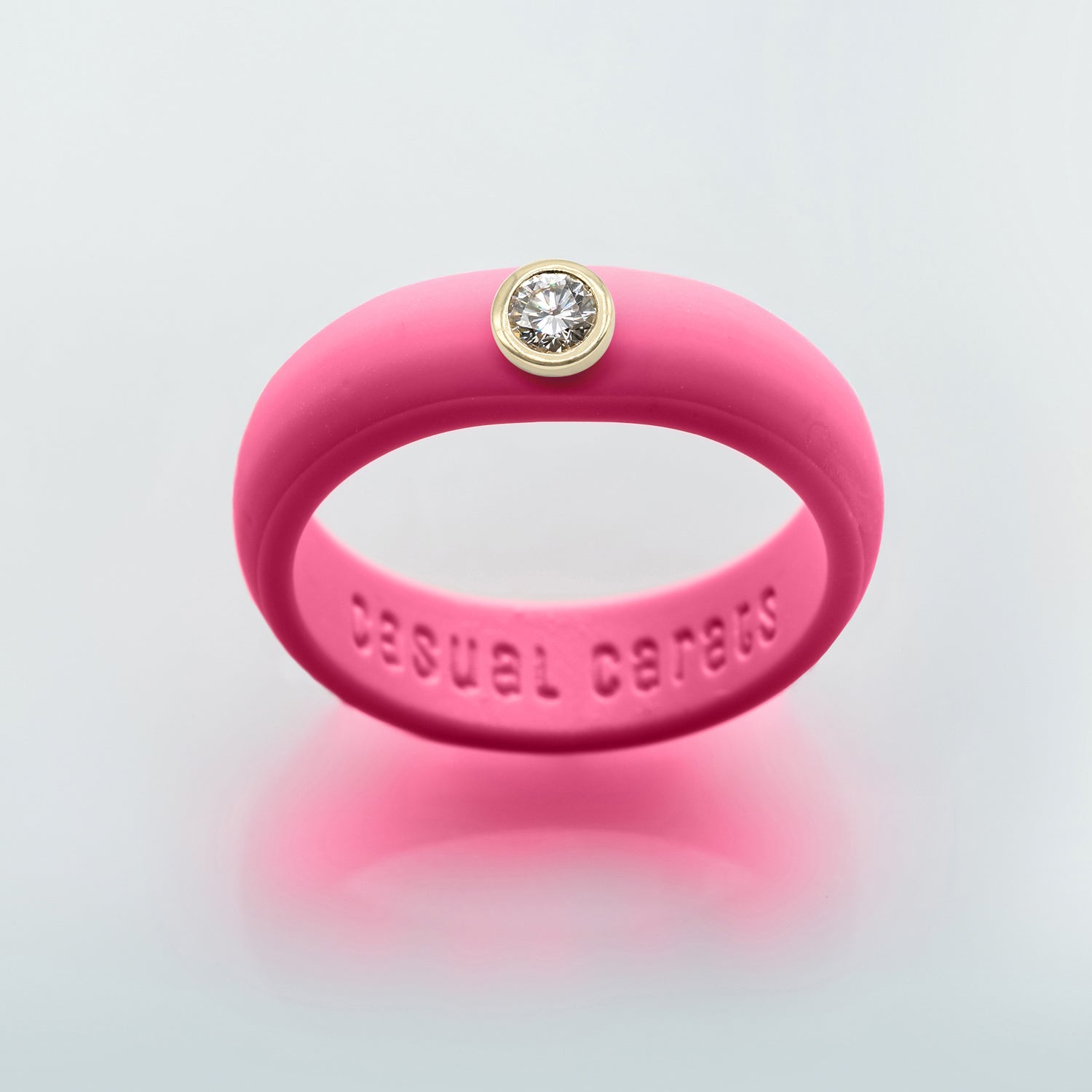
The Main Types of Ring Settings
Below are the diamond setting types worth knowing, arranged loosely from the most exposed and brilliant to the most protected and practical. Here is the quick map before the details.
|
Setting |
Sparkle |
Durability |
Best for |
|
Prong |
Very high |
Moderate |
Maximum brilliance, classic look |
|
Bezel |
Moderate |
Very high |
Active hands, everyday wear |
|
Halo |
Very high |
Moderate |
Extra size and presence |
|
Pavé |
High |
Moderate |
All-over sparkle |
|
Channel |
Moderate |
High |
Bands and active wear |
|
Three-stone |
High |
Moderate to high |
Symbolic pieces, side-stone looks |
|
Tension |
High |
Moderate |
Modern, minimal design |
|
Flush |
Low to moderate |
Very high |
Low-profile, hands-on routines |
Prong Setting
The prong setting is the one most people picture first. Four or six slim metal claws lift the stone above the band and hold it at the edges, which lets light reach the gem from almost every angle and produces the brightest return.
This setting suits anyone who wants traditional brilliance and a classic look.

Main problems: The stone is fully exposed, so raised prongs can catch on clothing or hair, and they need a quick check from a jeweler now and then to stay tight.
Bezel Setting
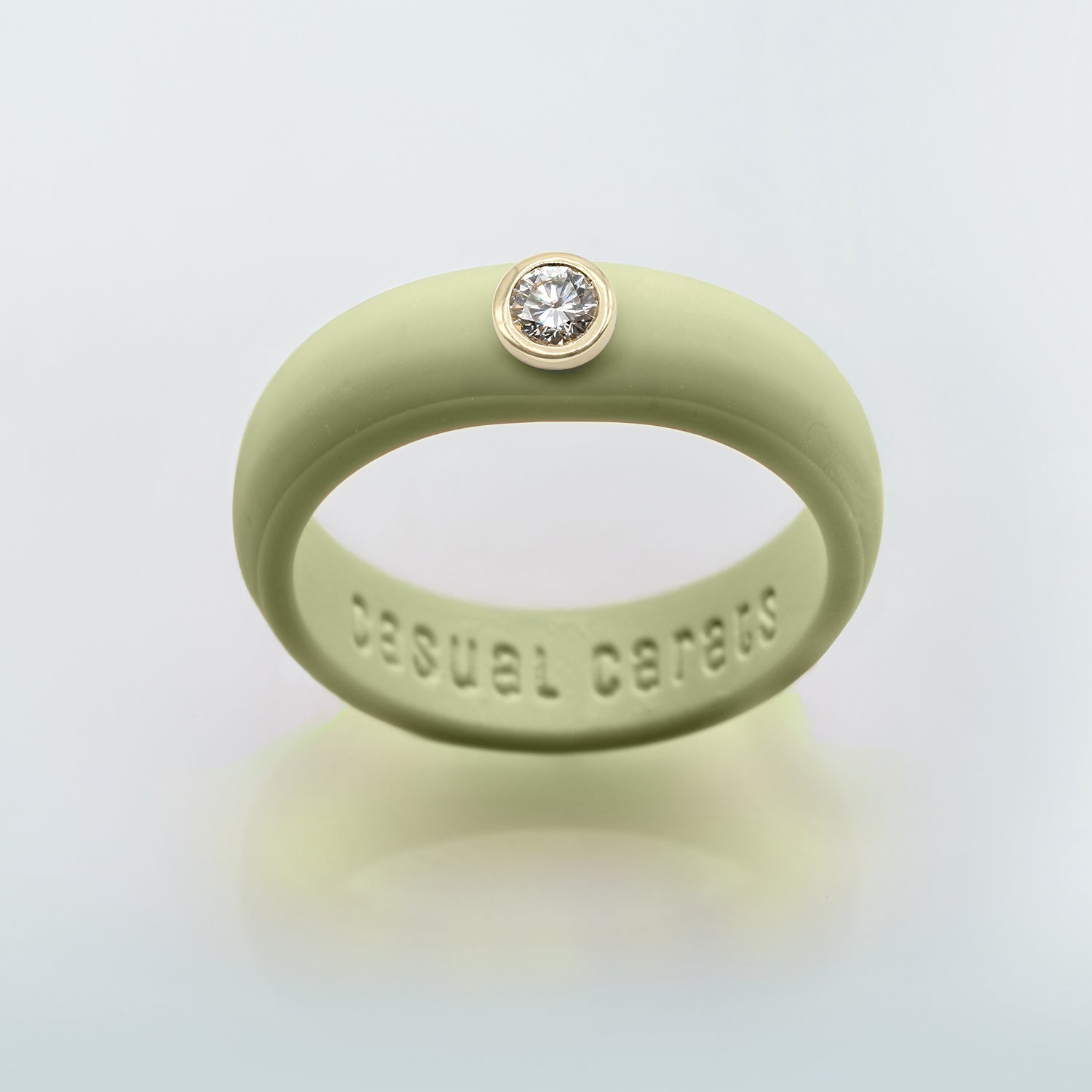
A bezel wraps a thin rim of metal around the edge of the stone, either fully or partway. The stone rests lower, the profile stays clean, and the surrounding metal guards the gem against knocks. This is the setting built for movement, which is exactly where Casual Carats lives. Our colorful ceramic bezel rings show how a bezel-held diamond pairs with a flexible band for people who keep their rings on through workouts and daily tasks.

Main problems: Sparkle reads slightly softer than a prong, since the rim covers part of the stone's edge and trims the light that reaches the gem.
Halo Setting
A halo rings the center stone with a circle of small accent diamonds, which makes the middle gem read larger and adds brightness without raising the center carat weight. This one works as much like a design style as a holding method, which connects back to the setting-versus-style point from earlier.

Main problems: The accent stones are usually pavé-set, so they call for the same periodic attention that small stones need to stay secure.
Pavé Setting
Pavé places tiny stones in close rows along the band, held by small beads of metal, to create a near-continuous line of sparkle. The effect spreads light across the whole ring rather than concentrating it in the center. Pavé combines easily with other holds, which is why it appears on so many halo and solitaire designs.

Main problems: Because the stones are small and closely set, a few can loosen over time and may need re-tipping during a check-up.
Channel Setting
In a channel setting, stones nestle in a groove between two walls of metal with no prongs between them, so the surface stays smooth and continuous. The closed sides resist snagging and hold up well, which makes channel a frequent pick for wedding ring settings, eternity bands, and anniversary pieces.

Main problems: Cleaning takes more effort, since dirt gathers inside the channel and settles where a cloth cannot easily reach.
Three-Stone Setting
A three-stone design places a center gem between two side stones, a layout read as past, present, and future. The stones can be held by prongs or bezels depending on the look you want, and the format gives strong presence to engagement ring settings and milestone gifts. It also opens the door to mixing stone types, such as a diamond center with colored sides.

Main problems: More stones mean more edges to inspect, and matching the side stones to the center for color and size adds to the cost.
Tension Setting
A tension setting holds the stone with pressure from the two ends of the band, so the gem appears to float with little visible metal around it. The look is modern and uncluttered.

Main problems: Each ring is calibrated to one specific stone, so resizing is difficult and swapping the gem later is complicated, which makes it best for someone certain of the design.
Flush (Gypsy) Setting
A flush setting sinks the stone into the band so its top rests level with the metal surface. The profile could not be lower, and the piece handles rough days with ease, which makes flush a favorite for minimalist designs and men's rings where durability leads.

Main problems: Light return is the quietest of the group, since the metal surrounds most of the stone and lets less of it show.
How Do You Choose the Right Setting?
The right setting is the point where three things meet: your diamond's shape, your daily routine, and the look you genuinely want to wear for years. Here is how to work through them in order.
Start with the stone's shape
Round stones adapt to nearly any setting, while pointed and elongated cuts such as pear, marquise, and princess have corners that need guarding, which steers you toward a bezel or a V-prong. Your diamond shape narrows the field faster than any other factor, so settle the shape first.
Weigh what your hands do all day
Desk-and-dinner routines can carry the raised brilliance of a prong with no trouble. Hands-on work, gym sessions, caregiving, and healthcare shifts call for low-profile ring settings like bezel, channel, and flush that stay out of the way and keep the stone protected.
Be honest about maintenance
Prong and pavé designs want periodic jeweler checks to keep stones tight, while bezel, channel, and flush come much closer to a put-it-on-and-forget-it piece.
Let the occasion guide the lean, not decide it
Everyday pieces and wedding ring settings tend toward practical holds like channel and bezel, and statement looks pull toward raised, sparkly designs. These are soft tendencies, so a practical hold for a big moment or a sparkly one for daily wear breaks no rule.
Once those three line up, the choice tends to make itself. The setting that tops the popularity lists is not automatically the one for your hand.
Which Settings Suit an Engagement Ring
A proposal ring usually puts the center stone front and center, so the most popular engagement ring settings cluster around a handful of holds. Start your shortlist here.
-
Solitaire prong: the traditional proposal look, with all eyes on the center diamond.
-
Halo: makes a modest center stone read bigger, which can stretch a ring budget further.
-
Three-stone: carries the past, present, and future meaning many couples want in the piece.
-
Bezel: the pick for a proposal ring that holds up through a hands-on life.
-
Pavé band: an accent layered onto any of the holds above for extra shine down the shank.
Finding the Setting That Fits Your Life
Once you see a setting as the structure doing the real work, the long list of their types stops feeling like a wall of names and turns into a short, manageable set of choices. Match the hold to your stone, your hands, and the way you move through a normal week, and the ring you pick will look right and wear well for a long time.
FAQ


