


Diamond Color Chart with D to Z Color Grades
Color is one of the four measures that decide what a diamond is worth, and it gets scored on a lettered scale running from D down to Z. D holds no color at all. Z carries a tint anyone can spot from across the table. Every grade between those two shifts by a small step, and those small steps move the price more than you can expect.
A diamond color chart gathers all 23 grades in one place so the differences read clearly. So, below you will find what each group looks like on the hand, which grades stretch a budget furthest, and how to match one to your ring.
Key Takeaways
-
The color scale runs from D to Z and measures how little color a diamond holds.
-
Grades sort into five named groups, from colorless at the top down to light.
-
Near colorless stones give most buyers the strongest value for the money.
-
Your gold color and stone shape change how color reads on the hand.
-
Color and clarity get read together when you settle on a stone.
What Does the Diamond Color Chart From D to Z Show?
The diamond color chart ranks a stone by how much color it holds, running from D for colorless down to Z for a light yellow or brown tint.
Color grading measures absence, so the less color a stone shows, the higher it lands and the more it costs.
The Gemological Institute of America built the diamond color scale back in the 1950s and started it fresh at D, since earlier systems used a jumble of letters and numbers that led to confusion. Prices ease downward as you move through the alphabet, so a G grade costs less than a D of the same size and cut.
A diamond grading chart sorts the 23 letters into five bands so the differences read clearly. Those five bands are colorless, near colorless, faint, very light, and light.

Colorless (D to F)
Diamonds in this band show no color to the naked eye and sit at the top of the scale.
|
Grade |
Visible tint |
Rarity |
Price level |
What to know |
|
D |
No |
Rarest |
Highest |
Coolest white, top of the scale |
|
E |
No |
Very rare |
Very high |
Looks the same as D to the eye |
|
F |
No |
Very rare |
High |
Fully white face up |
A D color diamond holds zero tint and commands the steepest price, since stones this pure are hard to find.
These are the diamond color grades to pick when you want the brightest white and your budget has room.
P.S.: Our lab-grown stones fall at E, which places them right inside this colorless band.
Explore Our Lab-Grown Diamond Collection
Browse Collection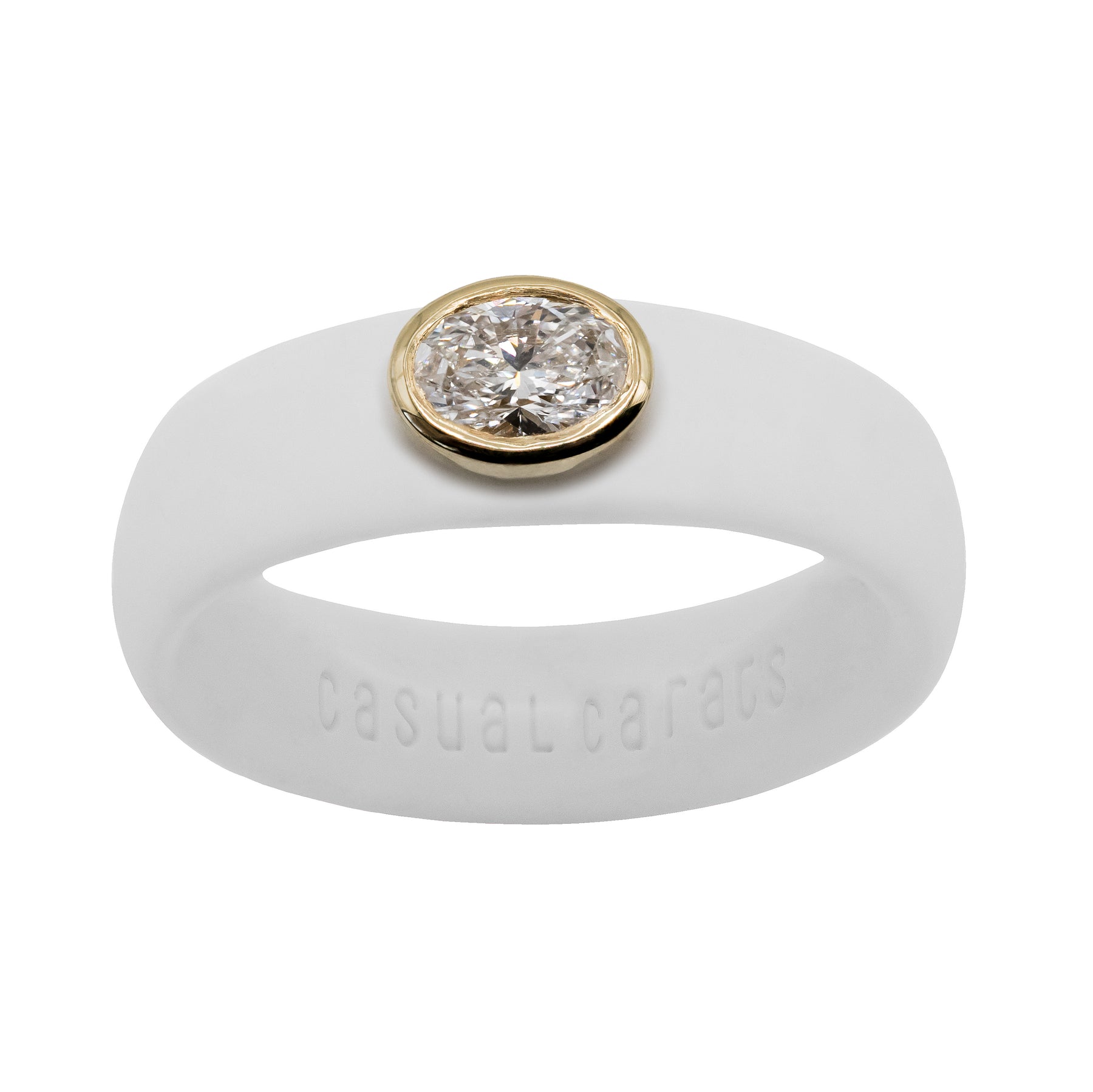
Near Colorless (G to J)
These grades face up white to the naked eye and give most buyers the strongest value.
|
Grade |
Visible tint |
Rarity |
Price level |
What to know |
|
G |
No |
Rare |
High |
Faces up white, excellent value |
|
H |
No |
Rare |
Moderate |
Warmth shows only beside a colorless stone, best value |
|
I |
Faint |
Uncommon |
Moderate |
Reads white once set, best value |
|
J |
Faint |
Uncommon |
Moderate |
Slight tint in larger stones, pairs well with yellow gold |
The best diamond color for their money lives here, since a near colorless diamond costs well below a D or E and still looks white on the hand. On the diamond color chart, this band is where a white look and a fair price meet for the widest group of buyers.
Faint (K to M)
These grades carry a warmth you can see without any training, and they cost less than the grades above.
|
Grade |
Visible tint |
Rarity |
Price level |
What to know |
|
K |
Yes, up close |
Common |
Low |
Warms up nicely in yellow gold |
|
L |
Yes |
Common |
Low |
Suits smaller stones and warm settings |
|
M |
Yes |
Common |
Low |
Clear warmth, strongest savings |
Warmth like this is why K, L, and M sit lower on the diamond color scale and carry friendlier prices. A yellow gold bezel plays to your advantage, since the warm metal blends with the stone and quiets the tint.
Color grows easier to see as the stone gets bigger, so this band suits smaller stones best.
Very Light to Light (N to Z)
Stones from N through Z show an obvious yellow or brown tint and sit at the bottom of the range with the lowest prices.
|
Range |
Visible tint |
Rarity |
Price level |
What to know |
|
N to R (Very Light) |
Yes |
Common |
Low |
Rarely picked for a white look |
|
S to Z (Light) |
Yes, strong |
Common |
Lowest |
Edges toward fancy color territory |
For a bright, white look, these grades fall short, and most jewelers steer buyers higher. One happy exception shows up on the diamond color chart. Some people want warm, rich color on purpose, and a natural brown stone delivers exactly that.
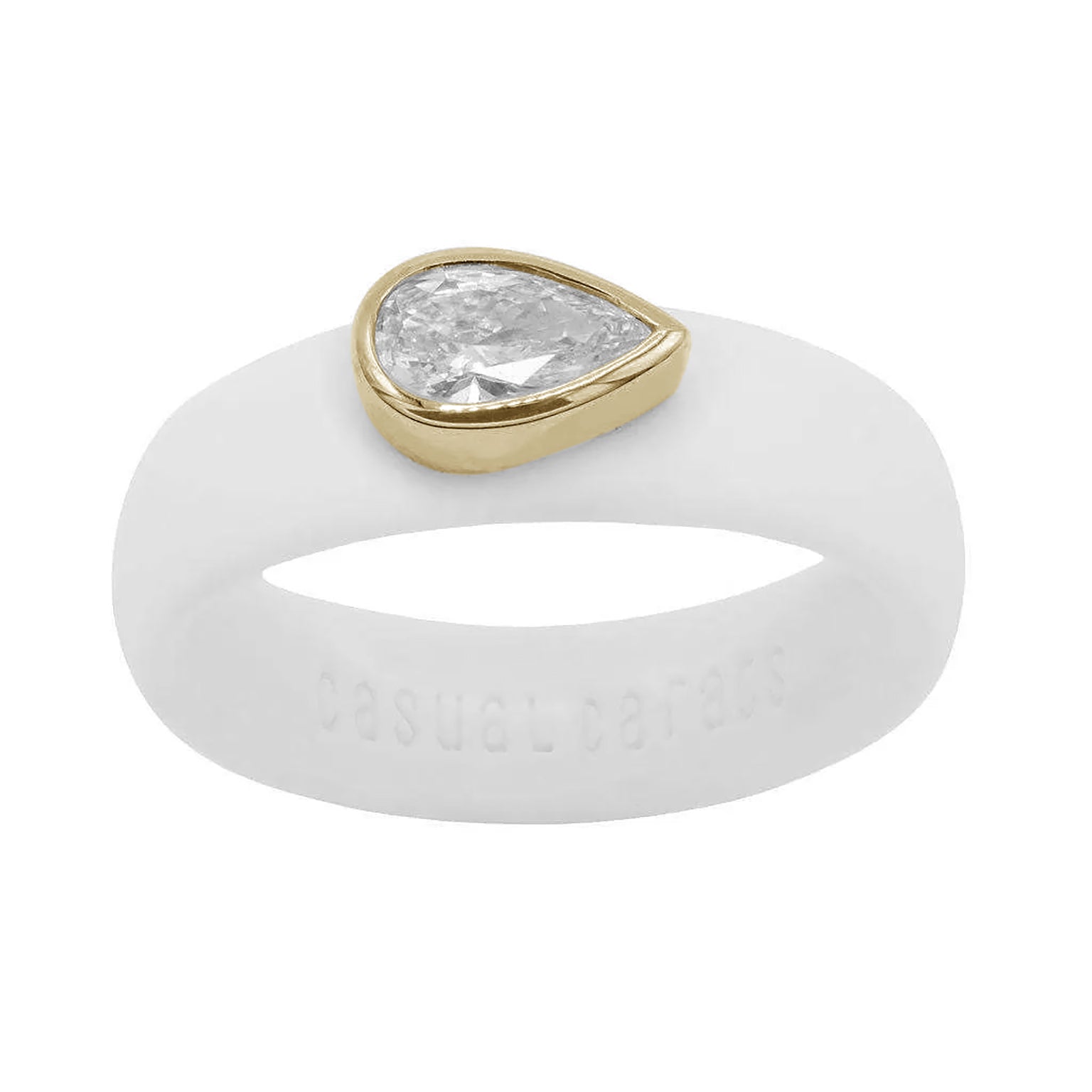
Our cognac diamond collection leans into the warmth, pairing genuine brown diamonds with our silicone bands for a look full of character and depth.
How Do Color and Clarity Work Together on a Grading Chart?
Color rarely gets chosen on its own. Clarity, which grades the tiny marks inside a stone, sits right beside color on a report, and the two shape the look and the price together.
A diamond clarity and color chart placed side-by-side shows you where to spend and where to ease back. A stone with a strong color grade and a mid-range clarity grade can look clean to the eye and cost far less than one that maxes out both numbers.
The diamond color and clarity scale helps you weigh the two so your money lands where it shows most. Keeping both measures means nothing slips past you when you compare stones.
How Do You Choose the Best Color Grade For Your Ring?

Start with the metal around your stone, since it changes how the color reads.
White metals such as white gold and sterling silver reveal any warmth, so cooler grades in the colorless and near colorless bands hold up best against them.
Warm metals work the other way. Yellow gold blends with tint, so you can drop a grade or two, and rose gold hides warmth the best of the group, which lets the lower grades shine.
Reading the diamond color chart with your setting in mind saves money without changing the look you see.
|
Metal |
Color grades that pair well |
Why it works |
|
White gold |
D to H |
Cool white tone reveals any warmth, so stay higher |
|
Sterling silver |
D to H |
Bright white finish, follow the white gold range |
|
Yellow gold |
G to K |
Warm tone blends with tint, so drop a grade or two |
|
Rose gold |
I to M |
Warm pink tone hides warmth best, so go lowest here |
Stone shape carries weight too. Round cuts hide color well through their faceting, so a slightly lower grade still faces up white. Open cuts such as emerald and oval show more of the body color, so buyers tend to move up a grade for those shapes.
Size works the same way, since a bigger stone gives color more room to show, which is why diamond weight and value sit right alongside color in any buying choice. Line up the diamond color grades you are weighing, factor in your gold and shape, and put your budget where it shows most on the diamond color scale.
FAQ


